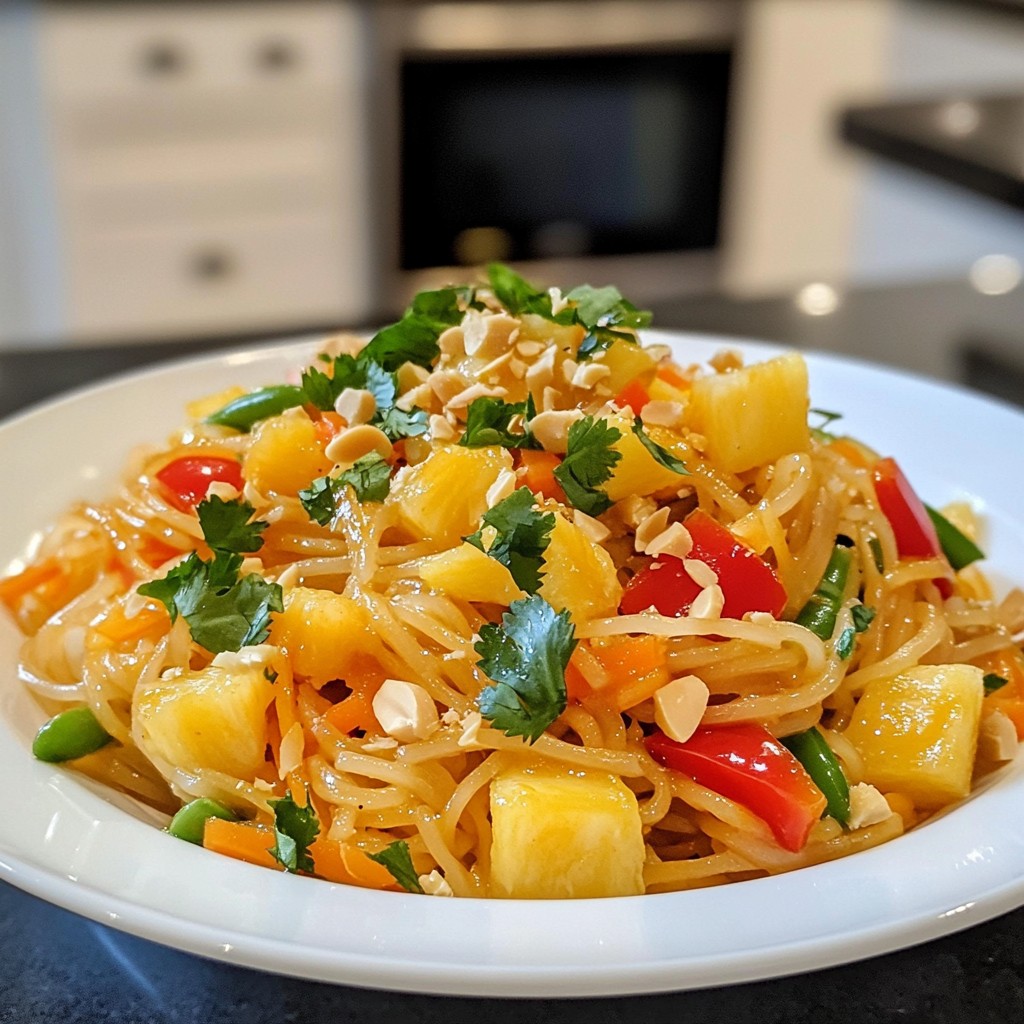
Are you ready to dive into a bowl of deliciousness? My Thai Pineapple Peanut Noodles are not just tasty; they're also super easy to make! In this post, you’ll find a simple recipe with fresh ingredients and helpful tips. Whether you want a quick weeknight dinner or a fun dish for friends, these noodles deliver. Let’s get cooking and bring some vibrant flavors to your table!
Why I Love This Recipe
- Fresh and Flavorful: The combination of fresh pineapple and colorful vegetables brings a burst of flavor that is both refreshing and satisfying.
- Quick and Easy: This recipe comes together in just 20 minutes, making it perfect for busy weeknight dinners.
- Healthy Ingredients: Loaded with vegetables and whole food ingredients, this dish is nutritious while still being indulgent.
- Customizable: You can easily modify this recipe by adding your favorite proteins or substituting vegetables based on what you have on hand.
Ingredients
Detailed Ingredient List
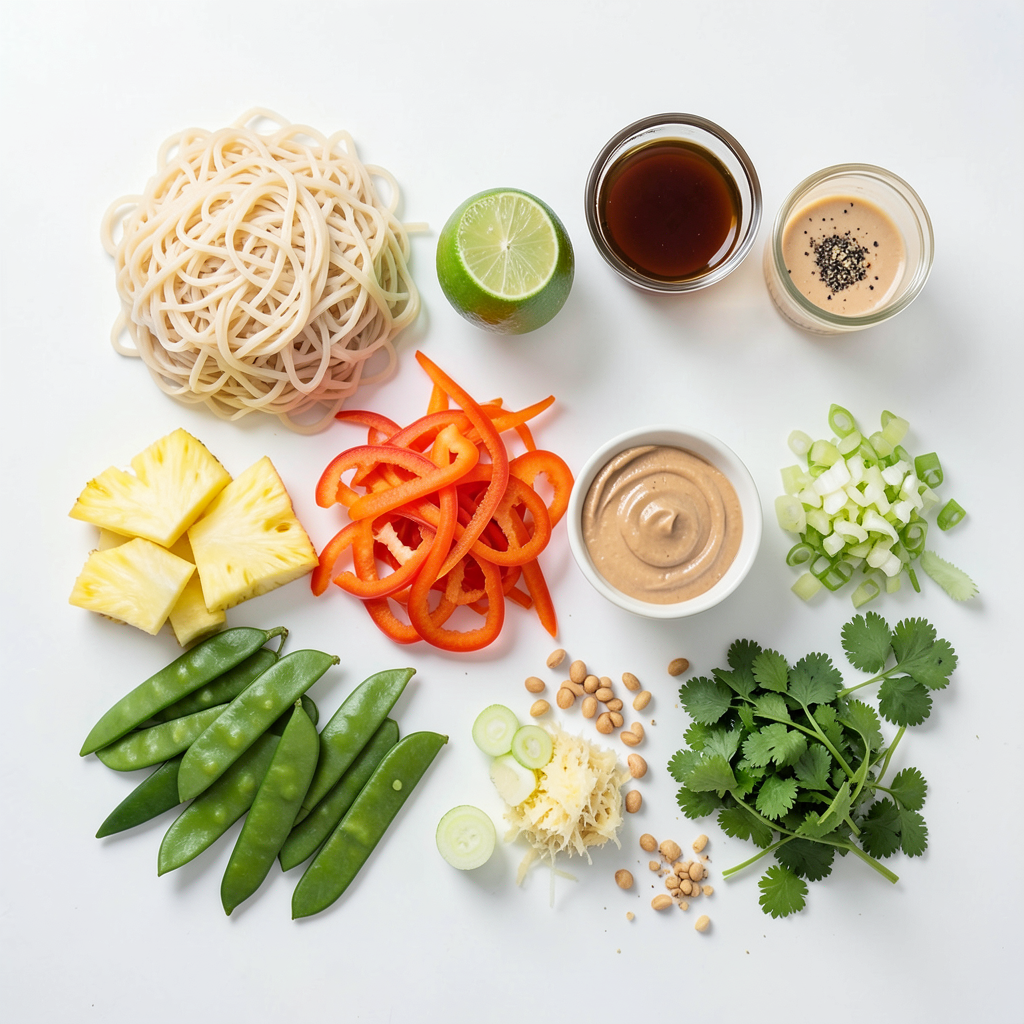
For this Thai Pineapple Peanut Noodles dish, gather these fresh ingredients:
- 8 oz rice noodles
- 1 cup fresh pineapple chunks
- 1 cup bell peppers (mixed colors), thinly sliced
- 1 cup snap peas, trimmed
- 1/2 cup shredded carrots
- 3 green onions, chopped
- 1/4 cup creamy peanut butter
- 3 tablespoons soy sauce
- 2 tablespoons lime juice
- 1 tablespoon honey or maple syrup
- 1 teaspoon grated ginger
- 1 clove garlic, minced
- 1 tablespoon sesame oil
- Crushed peanuts and cilantro for garnish
These ingredients create a vibrant, tasty dish that pops with flavor.
Substitutions for Allergens
If you have allergies or preferences, you can swap some ingredients:
- For gluten-free, use tamari instead of soy sauce.
- Substitute almond butter or sunflower seed butter for peanut butter.
- If you're avoiding pineapple, mango or apples work well.
- Skip the honey for agave syrup if you want a vegan option.
These swaps keep the dish delicious while meeting your needs.
Equipment Needed
To make this recipe, you’ll need some kitchen tools:
- A large pot for cooking rice noodles.
- A large skillet or wok for stir-frying.
- A whisk for mixing the peanut sauce.
- A cutting board and knife for chopping vegetables.
- A measuring cup and spoons for precise amounts.
Having the right tools makes cooking easier and more fun!
Step-by-Step Instructions
Cooking the Rice Noodles
First, you need to cook the rice noodles. Boil water in a large pot. Once it boils, add the noodles and cook according to the package instructions. This usually takes about 4 to 6 minutes. After cooking, drain the noodles in a colander. Rinse them with cold water to stop the cooking. This keeps them from getting mushy. Set the noodles aside for later.
Preparing the Vegetables
Next, let’s prepare the vegetables. Grab your bell peppers and slice them thinly. Use mixed colors for a fun look! Then, trim the snap peas, and shred the carrots. Chop the green onions into small pieces. You can add all these veggies to a large bowl. This makes it easy to grab them when you cook.
Making the Peanut Sauce
Now, we will make the peanut sauce. In a separate bowl, add the creamy peanut butter. Pour in the soy sauce, lime juice, and honey or maple syrup. Use a whisk to mix everything together until it’s smooth. You can also add grated ginger and minced garlic for extra flavor. This sauce will make your noodles taste amazing!
Combining and Serving the Dish
It’s time to combine everything! In a large skillet or wok, heat sesame oil over medium heat. Add garlic and ginger, sautéing for about 30 seconds. Then, toss in the bell peppers, snap peas, and shredded carrots. Stir-fry for 3 to 4 minutes until the veggies are tender yet still crisp. Now, add the cooked noodles and pineapple chunks. Pour the peanut sauce over everything and toss gently. Heat for another 2 to 3 minutes. Remove from heat and stir in the chopped green onions.
Serve your Thai pineapple peanut noodles warm. Garnish each plate with crushed peanuts and fresh cilantro for a pop of flavor. Enjoy!
Tips & Tricks
How to Customize Your Dish
You can make this recipe fit your taste. Here are some ideas:
- Add protein: Try chicken, shrimp, or tofu. These will make your dish heartier.
- Mix in more veggies: Add broccoli, carrots, or zucchini. They boost flavor and nutrition.
- Change the fruit: Use mango or papaya instead of pineapple. This adds a new twist.
Recommended Cooking Techniques
Use simple methods to get the best results:
- Stir-frying: This quick method keeps veggies crisp. Heat your pan well before adding ingredients.
- Whisking: Combine sauce ingredients in a bowl. This helps create a smooth sauce.
- Rinsing noodles: Rinse with cold water after cooking. This prevents them from sticking together.
Serving Suggestions
Make your meal look great and taste even better:
- Garnish: Sprinkle crushed peanuts and fresh cilantro on top. This adds color and crunch.
- Serve warm: This dish tastes best hot. Keep it warm until ready to eat.
- Pair with drinks: A cold drink like iced tea or lemonade complements the dish nicely. Enjoy!
Pro Tips
- Use Fresh Ingredients: Fresh pineapple and crisp vegetables enhance the flavor and texture of this dish, making it more vibrant and enjoyable.
- Adjust the Sauce: Feel free to adjust the peanut sauce ingredients according to your taste preferences; add more lime juice for tanginess or honey for sweetness.
- Vegetable Variations: Experiment with other vegetables such as zucchini, broccoli, or baby corn to add variety and color to your noodles.
- Garnish for Flavor: Don't skip the crushed peanuts and cilantro garnish; they add crunch and a fresh herbal note that elevates the overall dish.
Variations
Vegan and Gluten-Free Options
You can make Thai pineapple peanut noodles vegan and gluten-free. Use rice noodles, which are gluten-free. For the sauce, swap honey with maple syrup. This keeps the sweet flavor while staying vegan. Check your soy sauce label for gluten-free options too. Many brands offer a gluten-free version. You can enjoy this dish without any animal products.
Alternative Vegetables to Use
You can mix and match vegetables in this dish. Try using broccoli, zucchini, or mushrooms. These add color and texture. Thinly slice carrots or use baby spinach for extra greens. If you like spice, add sliced jalapeños or chili peppers. The great thing about this recipe is its flexibility. Feel free to use what you have on hand!
Different Protein Additions
Adding protein makes this dish even better. You can use tofu, shrimp, or chicken. For a vegan option, try chickpeas or edamame. Cook the protein in the skillet before adding the vegetables. This gives it flavor and helps it cook through. Mix it all together with the noodles and sauce for a hearty meal. Each protein adds its own taste and texture!
Storage Info
How to Store Leftovers
After enjoying your Thai pineapple peanut noodles, let them cool to room temp. Then, transfer them to an airtight container. This keeps them fresh longer. Store the container in the fridge. Your noodles will stay good for up to three days.
Reheating Instructions
To reheat, use a skillet over medium heat. Add a splash of water or a little sesame oil. This helps prevent sticking. Stir gently until warmed through, about 5 minutes. You can also use the microwave. Place your noodles in a microwave-safe bowl. Heat for 1 to 2 minutes, stirring halfway.
Freezing Options
You can freeze these noodles for later use. First, cool them completely and place them in a freezer-safe bag. Remove as much air as possible before sealing. Your noodles will keep well for up to two months. To serve, thaw in the fridge overnight. Reheat as mentioned above for best results.
FAQs
Can I use different types of noodles?
Yes, you can use different noodles. If you want a gluten-free option, try rice noodles. You can also use soba noodles or even spaghetti. Each type brings a unique taste and texture. Always cook them according to the package directions. This way, they will blend well with the sauce.
What can I substitute for peanut butter?
If you need a substitute for peanut butter, try almond butter or sunflower seed butter. Both have a similar texture and will work in the sauce. If you want a nut-free option, sunflower seed butter is great. You can also use tahini for a different flavor. Just make sure the texture stays creamy.
How spicy is this dish?
This dish is not very spicy. The heat mainly comes from the garlic and ginger. If you like spice, add some red pepper flakes or sriracha to the sauce. Start with a small amount, then taste and adjust. This way, you can find the perfect level of heat for you.
This blog post covered essential topics for making a great rice noodle dish. I listed the ingredients and shared how to prepare and cook them. You learned about substitutes for allergens and how to customize your meal. I also gave storage tips to keep your leftovers fresh.
In the end, you can make a tasty dish that suits your tastes. Enjoy experimenting and sharing your creations!