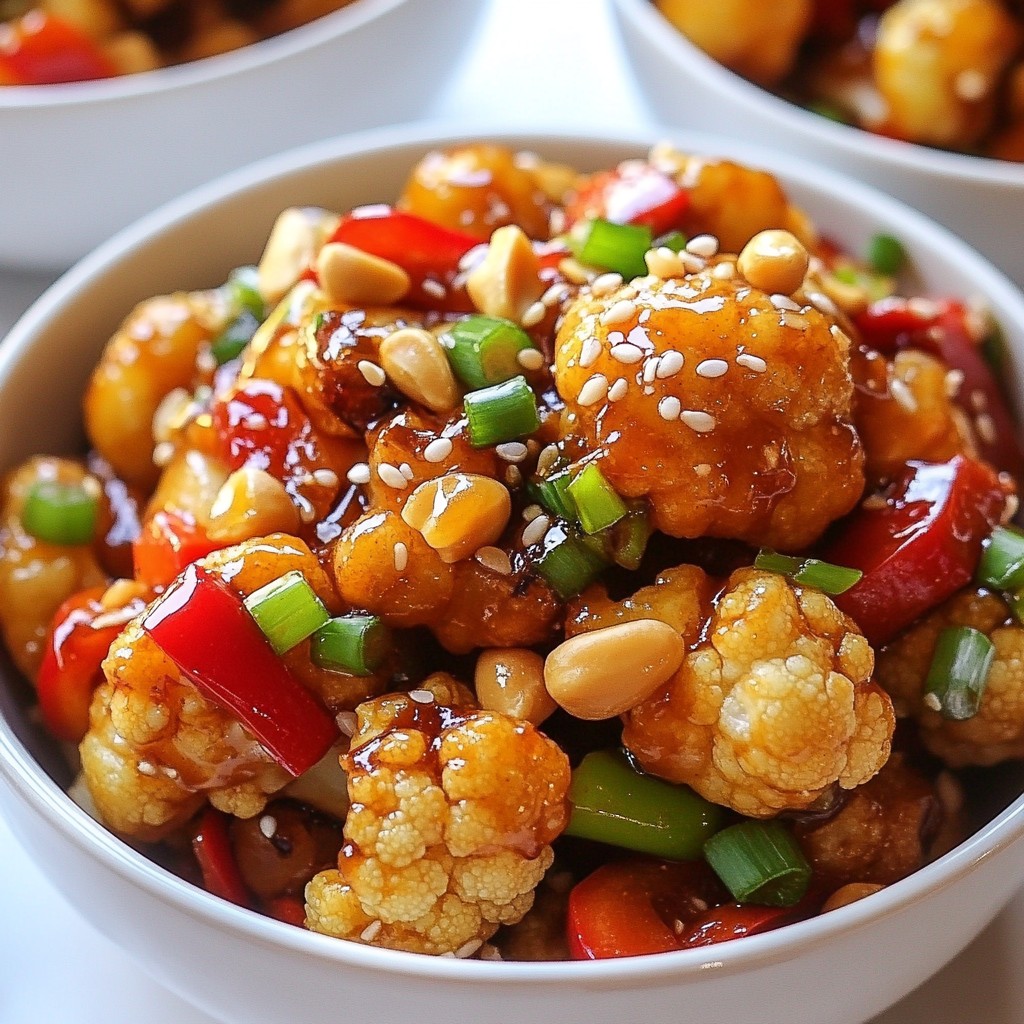
Are you ready to spice up your dinner routine? This Spicy Kung Pao Cauliflower is a zesty, flavorful dish that will delight your taste buds without sacrificing nutrition. With easy-to-find ingredients and simple steps, you’ll learn how to create a delicious meal that’s both satisfying and fun to make. Let's dive into this vibrant recipe that’s sure to become a new favorite on your table!
Why I Love This Recipe
- Flavorful and Spicy: This Kung Pao Cauliflower is loaded with bold flavors and a spicy kick that will satisfy your taste buds.
- Easy to Make:
- Healthy and Nutritious: Packed with vegetables and protein from peanuts, this dish is a healthier alternative to traditional Kung Pao chicken.
- Customizable: You can easily adjust the spice level and add your favorite vegetables to make it your own!
Ingredients
List of Ingredients
- Cauliflower and Vegetables
- 1 medium cauliflower, cut into florets
- 2 tablespoons vegetable oil
- 1 red bell pepper, diced
- 1 green bell pepper, diced
- 3 cloves garlic, minced
- 1-inch piece ginger, grated
- Pantry Staples for Sauce
- 3 tablespoons soy sauce
- 1 tablespoon rice vinegar
- 2 tablespoons hoisin sauce
- 1 tablespoon chili paste (adjust to taste)
- 1 tablespoon sugar
- 1/2 teaspoon cornstarch mixed with 1 tablespoon water (to thicken)
- Garnishes
- 1/4 cup roasted unsalted peanuts
- 2 green onions, sliced (for garnish)
- Sesame seeds (for garnish)
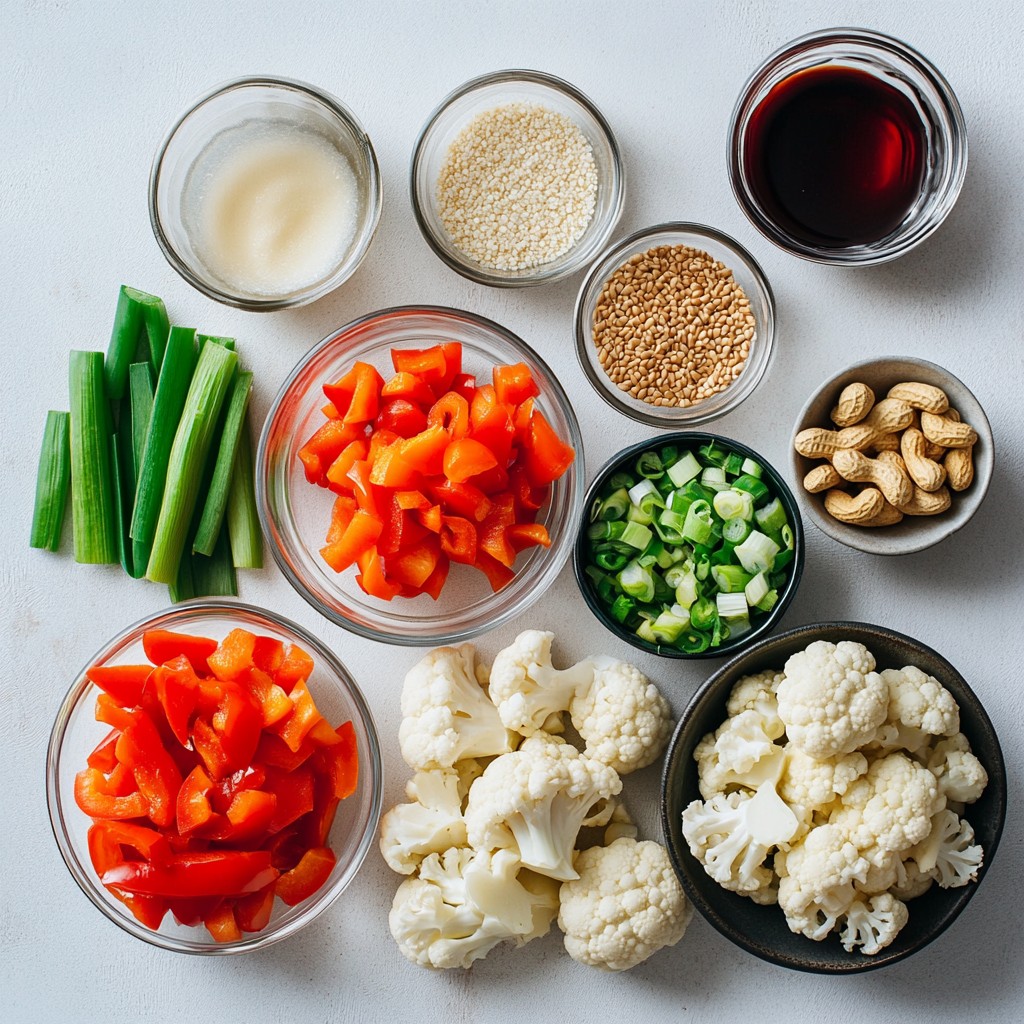
Gather these items before you start cooking. You can find most of them in your kitchen. This dish is all about fresh flavors and crunchy textures. The cauliflower shines as the star, while the sauce adds that spicy kick. This blend of ingredients makes a tasty meal that you can enjoy any time.
Step-by-Step Instructions
Preparing the Cauliflower
Preheating the Skillet Start by preheating a large skillet or wok over medium-high heat. Add two tablespoons of vegetable oil. Swirl the oil to coat the bottom of the pan. This step is key for a nice stir-fry.
Stir-Frying the Cauliflower Next, add the cauliflower florets to the hot skillet. Stir-fry them for about five to seven minutes. You want them to become tender and slightly browned. Keep stirring to avoid burning.
Adding Bell Peppers and Aromatics Now, toss in the diced red and green bell peppers along with three minced garlic cloves and one inch of grated ginger. Stir-fry for another three to four minutes. This adds great flavor and makes the peppers soft.
Making the Kung Pao Sauce
Mixing Sauce Ingredients In a small bowl, combine three tablespoons of soy sauce, one tablespoon of rice vinegar, two tablespoons of hoisin sauce, one tablespoon of chili paste, one tablespoon of sugar, and half a teaspoon of cornstarch mixed with one tablespoon of water. Whisk it all together until well blended.
Adding Sauce to Vegetables Pour the Kung Pao sauce over the cauliflower and peppers in the skillet. Stir well to coat everything evenly. Let it cook for about two to three minutes. The sauce should thicken and stick to the veggies.
Final Touches and Serving
Incorporating Peanuts Add a quarter cup of roasted unsalted peanuts to the skillet. Stir them in and cook for another minute. This gives the dish a nice crunch and adds protein.
Garnishing the Dish Remove the skillet from heat. Allow it to cool slightly. Serve the Kung Pao cauliflower hot. Garnish with sliced green onions and a sprinkle of sesame seeds for a beautiful finish.
Tips & Tricks
Perfecting Your Stir-Fry
- Choosing the Right Pan
Use a large skillet or wok. A wide base lets heat spread evenly. This helps cook the cauliflower well. Non-stick pans work great for easy stirring.
- Stir-Frying Techniques
Keep the heat high and the ingredients moving. Stir constantly to avoid burning. Adding vegetables in stages helps get the right texture. Start with cauliflower, then add softer veggies like bell peppers.
Adjusting Flavor and Spice
- Modifying Heat Level
If you want less heat, cut back on chili paste. Adding more sugar helps balance any heat too. For extra spice, toss in more chili paste or fresh peppers.
- Balancing Sweetness and Saltiness
Taste the sauce as you mix. If it’s too salty, add a bit more sugar. This balance makes the dish more enjoyable for everyone.
Enhancing Texture and Color
- Using Different Vegetables
Feel free to swap in other veggies. Broccoli, snap peas, or carrots add color and nutrients. Mix and match to keep it fresh and exciting.
- Adding Crunch with Garnishes
Top with roasted peanuts and sesame seeds. These add a nice crunch. You can also use chopped cashews or sunflower seeds for a twist.
Pro Tips
- Choose Fresh Cauliflower: Opt for a firm and heavy head of cauliflower with tightly packed florets for the best texture and flavor.
- Customize the Heat: Adjust the amount of chili paste in the Kung Pao sauce according to your spice preference, starting with less and adding more if needed.
- Toast the Peanuts: For enhanced flavor, lightly toast the peanuts in the skillet before adding them to the dish; this will bring out their natural oils and crunch.
- Serve Immediately: This dish is best served fresh and hot; the longer it sits, the softer the cauliflower will become, so enjoy it right away!
Variations
Alternative Protein Additions
You can change up this dish with different proteins. Tofu works great. It soaks up the sauce well and adds a nice texture. Use firm or extra-firm tofu for the best results.
Tempeh is another option. It has a nutty flavor and pairs well with the spices in Kung Pao sauce.
If you want meat, chicken or shrimp can be added. Cut the chicken into bite-sized pieces. Cook it in the skillet before adding the cauliflower. For shrimp, just toss them in after the cauliflower softens.
Sauce Modifications
You can easily adjust the sauce to fit your diet. For a vegetarian or vegan option, use soy sauce or tamari instead of regular soy sauce. This keeps it plant-based and just as tasty.
If you need a gluten-free sauce, look for gluten-free soy sauce or tamari. Hoisin sauce can also have gluten, so check your labels.
Preparing a Low-Carb Version
To make a low-carb version, try using cauliflower rice instead of regular rice. It keeps the meal light and is super easy to make.
You can also add other low-carb vegetables. Bell peppers, broccoli, or zucchini work well. They add color and flavor while keeping the dish healthy.
Storage Info
Refrigeration Guidelines
After enjoying your spicy Kung Pao cauliflower, you may have leftovers. Store them in an airtight container. This keeps the dish fresh and tasty. The leftovers will last in the fridge for about 3 to 5 days. When ready to enjoy again, reheat in a skillet or microwave. If using a skillet, warm it over medium heat. Stir often to heat evenly. In the microwave, heat in short bursts. Stir between each burst until hot.
Freezing Instructions
Freezing can help you keep Kung Pao cauliflower for longer. To freeze, let the dish cool completely. Then, scoop it into a freezer-safe container. Leave some space at the top. This allows for expansion when freezing. Seal the container tightly. The dish will stay good for up to 2 months.
For thawing, move the container to the fridge a day before you plan to eat it. This helps it thaw slowly and safely. When ready to reheat, use a skillet over medium heat. Stir often until hot. You can also use the microwave, heating in short bursts. Enjoy your spicy Kung Pao cauliflower again!
FAQs
How can I make Spicy Kung Pao Cauliflower less spicy?
To reduce the heat, you can cut back on the chili paste. Start with half a tablespoon instead of one. You can also add more sugar to balance the spice. Another good trick is to mix in some extra vegetables like bell peppers. They add sweetness and flavor without the heat. Adding a dollop of creamy yogurt or sour cream on the side also helps cool down the dish.
Can I use frozen cauliflower for this recipe?
Yes, you can use frozen cauliflower. Just make sure to thaw it first. Drain any excess water before cooking. This prevents the dish from becoming soggy. When you stir-fry, cook for a few extra minutes to make sure it warms through. The flavor will still be great, and it saves time!
What are some side dishes that pair well with Kung Pao Cauliflower?
Kung Pao Cauliflower goes well with many side dishes. Here are a few options:
- Steamed rice: It soaks up the sauce well.
- Quinoa: A healthy grain that adds protein.
- Fried rice: The flavors blend nicely together.
- Asian-style slaw: A crunchy side that adds freshness.
- Spring rolls: They make for a fun, crispy addition.
These sides complement the zesty and flavorful taste of your Kung Pao Cauliflower. Enjoy exploring these combinations!
This blog covers how to make Kung Pao Cauliflower from start to finish. We explored ingredients, cooking steps, and tips for perfecting your dish. You can adjust flavors, choose proteins, and even modify the sauce to fit your needs. Storing and reheating leftovers is easy, ensuring you enjoy this meal longer. Remember, cooking is about exploring and having fun. I hope you find success and joy in making this delicious dish!