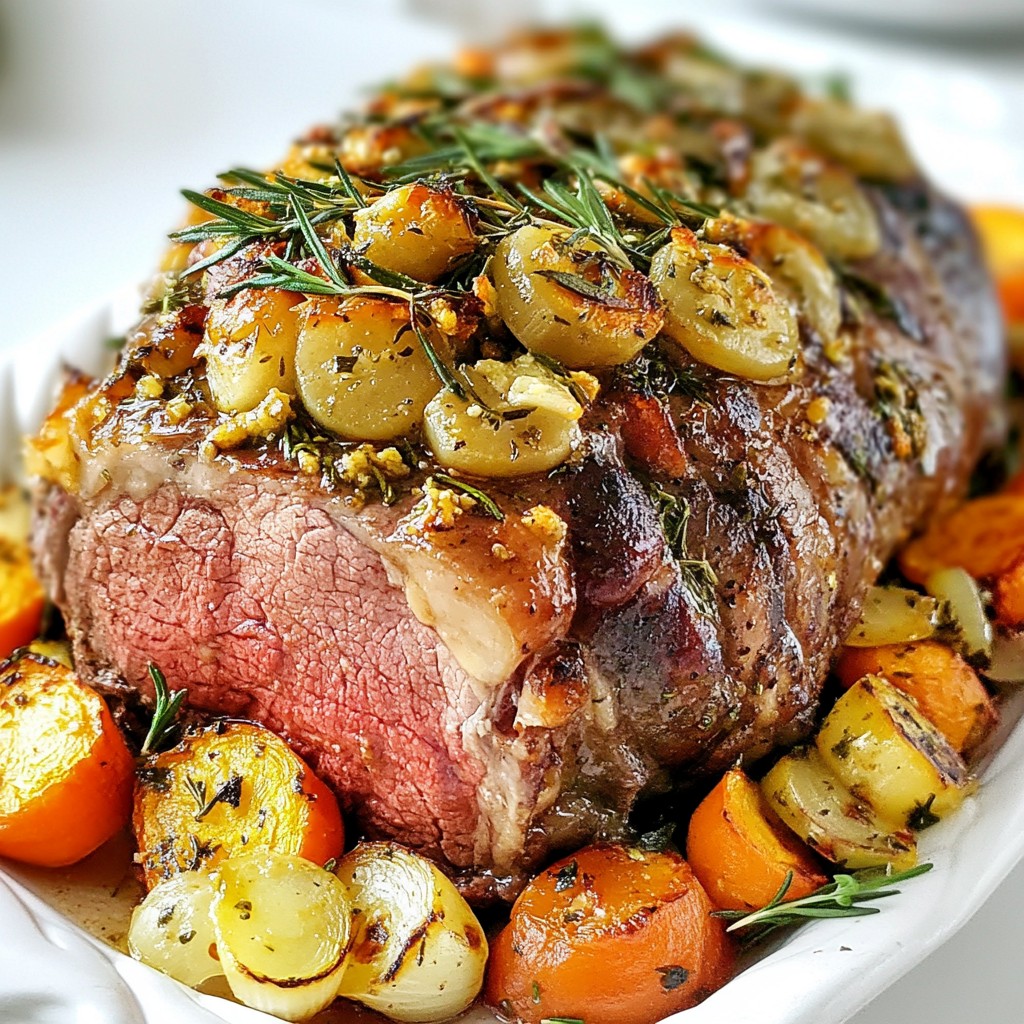
Are you ready to impress your guests with a stunning Garlic Butter Herb Prime Rib? This savory and juicy roast promises to elevate any meal. In this guide, I’ll walk you through each step, from choosing the perfect cut to creating a mouthwatering garlic butter herb blend. You’ll learn tips, tricks, and variations that will make your prime rib unforgettable. Let’s dive in and make this your best roast ever!
Why I Love This Recipe
- Flavor Explosion: This garlic butter herb mixture infuses the meat with incredible flavors, making each bite a savory delight.
- Perfectly Tender: The slow roasting method ensures the prime rib is juicy and tender, creating a melt-in-your-mouth experience.
- Elegant Presentation: Serving this dish at a gathering adds a touch of sophistication, perfect for special occasions or holiday dinners.
- Easy to Prepare: With simple ingredients and straightforward steps, this recipe is accessible for both novice and experienced cooks.
Ingredients
List of Required Ingredients
- 4 to 6 pounds prime rib roast
- 1/2 cup unsalted butter, softened
- 8 cloves garlic, minced
- 1 tablespoon fresh rosemary, chopped
- 1 tablespoon fresh thyme, chopped
- 1 tablespoon fresh parsley, chopped
- 1 tablespoon salt
- 1 teaspoon black pepper
- 1 teaspoon onion powder
- 1 teaspoon paprika
- 2 cups beef broth (low sodium)
To make the Garlic Butter Herb Prime Rib, you need fresh and quality ingredients. The prime rib roast is the star, so choose a cut with good marbling. This will give you a juicy and flavorful result.
Suggested Tools and Equipment
- Roasting pan
- Roasting rack
- Mixing bowl
- Meat thermometer
- Aluminum foil
- Paper towels
Having the right tools makes cooking easier. A roasting pan and rack help cook the meat evenly. A meat thermometer ensures you hit the perfect doneness.
Recommended Quality Cuts for Prime Rib
For the best results, look for well-marbled prime rib. The choice cuts are:
- Prime: This has the most marbling and flavor.
- Choice: This is still great but has less marbling than prime.
- Select: This is leaner and may not be as tender.
When selecting your prime rib, ask your butcher for the best cut. The more marbling, the better the flavor and juiciness.
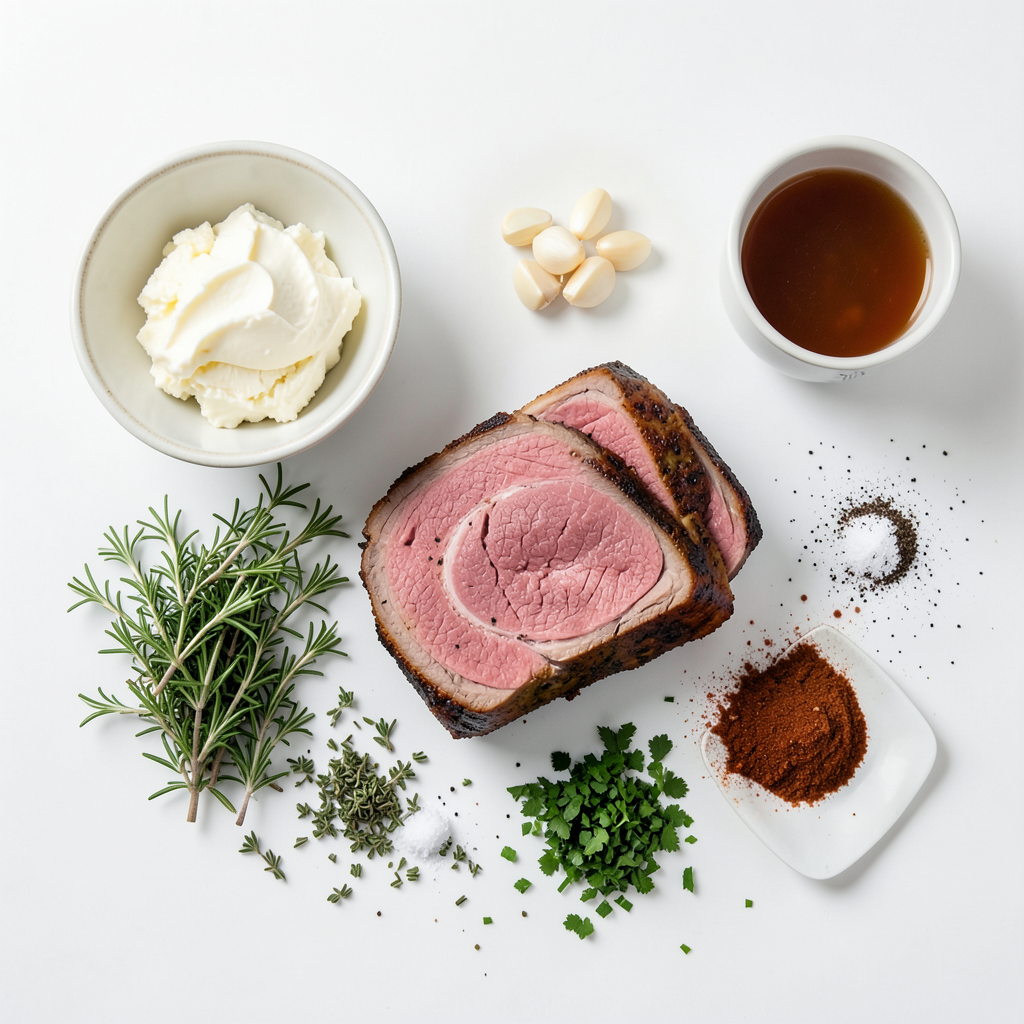
Step-by-Step Instructions
Preparing the Garlic Butter Herb Mixture
To start, I gather my ingredients. I need:
- 1/2 cup unsalted butter, softened
- 8 cloves garlic, minced
- 1 tablespoon fresh rosemary, chopped
- 1 tablespoon fresh thyme, chopped
- 1 tablespoon fresh parsley, chopped
- 1 tablespoon salt
- 1 teaspoon black pepper
- 1 teaspoon onion powder
- 1 teaspoon paprika
In a mixing bowl, I combine the softened butter with the minced garlic and herbs. I then add the salt, black pepper, onion powder, and paprika. Mixing it all together forms a smooth paste. This garlic butter herb mixture is key to great flavor.
Preparing and Seasoning the Prime Rib
Next, I take my prime rib roast, which weighs between 4 to 6 pounds. I pat it dry with paper towels. This step is important; it helps create a nice sear on the meat. Once dry, I rub the garlic butter herb mixture all over the roast. I make sure to get it into all the crevices. This is where the flavor builds up.
Roasting the Prime Rib
Now, I preheat my oven to 450°F (230°C). I place the roast on a roasting rack inside a pan. I pour 2 cups of low-sodium beef broth into the bottom of the pan. This broth keeps the meat moist and adds flavor.
I roast the prime rib in the preheated oven for 30 minutes. This high heat helps form a crust. After that, I lower the oven temperature to 325°F (165°C). The roast continues to cook for about 1.5 to 2 hours. I check the internal temperature. I aim for 125°F for medium-rare or 135°F for medium.
Once it’s done, I remove the roast from the oven and tent it with aluminum foil. I let it rest for 20 to 30 minutes. Resting is key; it helps the juices redistribute throughout the meat. Finally, I slice the prime rib and serve it with the pan drippings or a side of my choice.
Tips & Tricks
Achieving Perfect Doneness
To make sure your prime rib is just right, use a meat thermometer. Aim for 125°F for medium-rare and 135°F for medium. Insert the thermometer into the thickest part of the meat. Avoid touching the bone, as it can give a false reading. Check the temperature toward the end of the cooking time. Remember, the meat will continue to cook slightly after you take it out.
How to Sear for Better Flavor
Searing your prime rib adds a nice crust and boosts the flavor. Start by preheating your oven to 450°F. Pat the meat dry before you apply the garlic butter mixture. This step is key. A dry surface helps create a great sear. Roast it at this high heat for 30 minutes. Then lower the temperature to finish cooking. This two-step method locks in moisture and flavor.
Resting the Meat for Optimal Juiciness
Resting is a must for juicy prime rib. After roasting, tent the meat with foil for 20-30 minutes. This allows the juices to settle back into the meat. Cutting too soon will let those tasty juices run out. During this time, you can prepare your sides or set the table. Enjoy the aroma as it rests!
Pro Tips
- Resting is Key: Always let the prime rib rest after cooking. This allows the juices to redistribute, resulting in a more flavorful and tender roast.
- Use a Meat Thermometer: For perfect doneness, use a meat thermometer to check the internal temperature. Aim for 125°F for medium-rare or 135°F for medium.
- Enhance Flavor with Marinade: Consider marinating the roast overnight with the garlic butter mixture for an even deeper flavor profile.
- Serve with Pan Drippings: Don't forget to serve the sliced prime rib with the pan drippings. They add rich flavor and moisture to each bite.
Variations
Alternative Seasonings and Herbs
You can switch up the flavors with different herbs and spices. Add oregano for a warm taste. Try basil for a fresh twist. If you like heat, sprinkle cayenne pepper for a kick. You could also use dill or tarragon for a unique flavor. Experiment to find what suits your taste best.
Cooking Methods: Slow Roasting vs. High Heat
You can roast prime rib using two methods: slow roasting or high heat. Slow roasting keeps the meat tender and juicy. Set your oven to 225°F (107°C) and roast for several hours. This method helps the heat penetrate evenly. High heat gives a nice crust and faster cooking time. Start at 450°F (230°C) to sear the outside, then lower to 325°F (165°C). Each method has its perks, so choose what fits your style.
Serving Suggestions and Side Dish Pairings
Pair prime rib with sides that complement its rich flavor. Classic sides include creamy mashed potatoes and roasted vegetables. A sharp horseradish sauce adds a nice bite. You can also serve it with a fresh salad for balance. Don’t forget to drizzle some of the pan drippings over the meat. This adds extra flavor and makes the dish shine.
Storage Info
How to Store Leftover Prime Rib
After enjoying your garlic butter herb prime rib, store any leftovers properly. First, let the meat cool to room temperature. Wrap it tightly in plastic wrap or foil. You can also place it in an airtight container. This keeps the prime rib fresh for up to three days in the fridge. For the best taste, try to eat it within this time.
Reheating Tips for Maintaining Flavor
To reheat your prime rib, preheat your oven to 250°F (120°C). Place the meat in a baking dish and add a splash of beef broth. Cover it with foil to keep it moist. Heat for about 20 to 30 minutes, or until warmed through. This method keeps the juices intact and the flavor strong. Avoid using the microwave, as it can dry out the meat.
Freezing Guidelines for Prime Rib
If you want to save your leftover prime rib for a later date, freezing is a great option. Wrap it tightly in plastic wrap, then in aluminum foil. Label it with the date. It can last up to six months in the freezer. When ready to eat, thaw it in the fridge overnight. Reheat as mentioned above for the best taste.
FAQs
What is the best temperature to cook prime rib?
The best temperature to cook prime rib starts at 450°F (230°C). This high heat helps form a nice crust on the meat. After 30 minutes, lower the temperature to 325°F (165°C). This lower heat cooks the inside gently. For perfect doneness, aim for 125°F for medium-rare or 135°F for medium.
How long do I need to let the prime rib rest before serving?
Let the prime rib rest for at least 20 to 30 minutes after cooking. This step is key. Resting allows the juices to spread out in the meat. If you skip this step, the juices will run out when you slice. You want juicy, flavorful slices!
Can I use herbs other than rosemary and thyme?
Yes, you can use other herbs. Options include oregano, sage, or tarragon. Each herb offers a unique flavor. Feel free to mix and match based on your taste. Just remember to use fresh herbs for the best flavor. This adds more depth to your garlic butter herb mixture.
You now have a clear plan for cooking prime rib. Start with the right ingredients and tools. Follow the steps to prepare and roast it. Use tips to ensure perfect doneness and great flavor. Experiment with variations to find your favorite taste. Proper storage keeps leftovers fresh and delicious. Enjoy your prime rib with friends and family. Happy cooking!