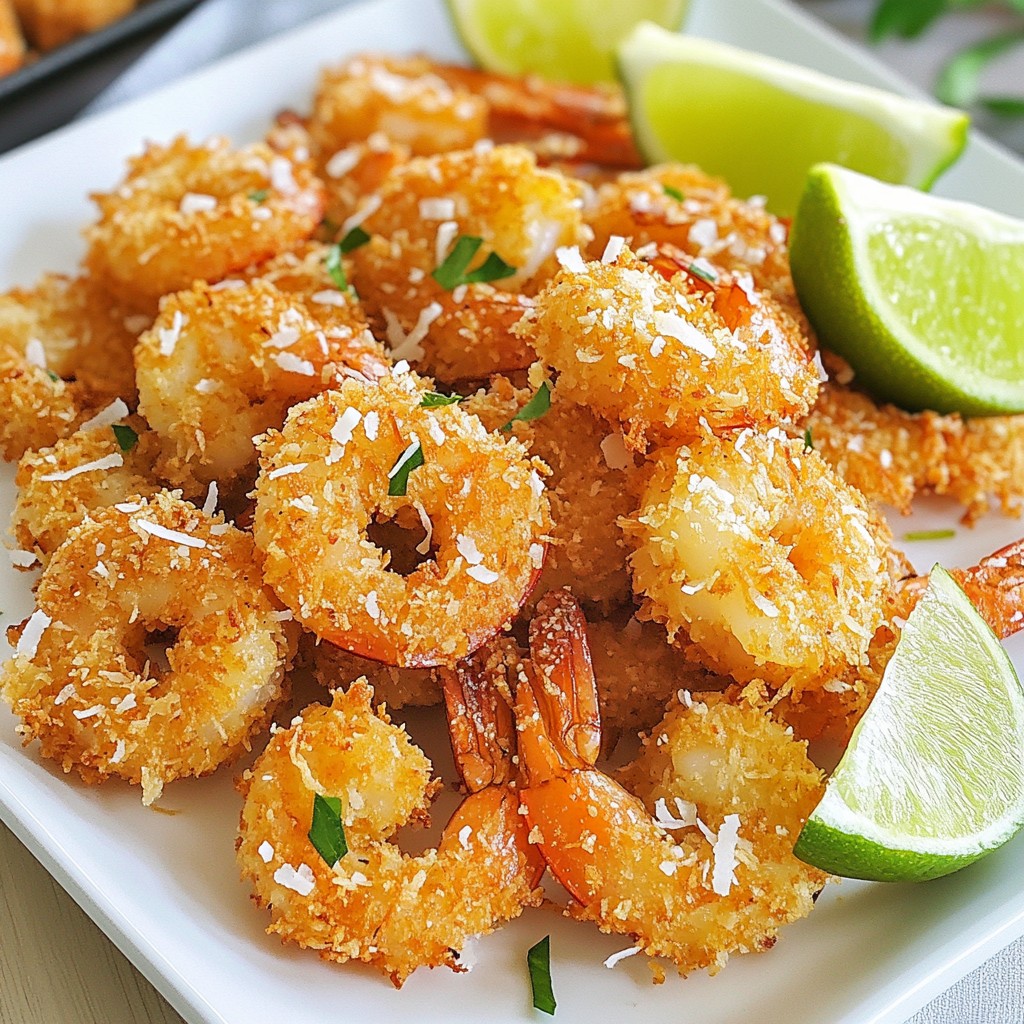
Coconut crusted shrimp are a crispy and flavorful delight that will impress anyone! I’m excited to share this easy recipe that brings a tropical twist right to your kitchen. You'll learn how to prepare the shrimp, set up a simple breading station, and fry them to golden perfection. Plus, I’ll give you tips on storage and tasty variations. Get ready to treat yourself to a dish that’s both fun and delicious!
Why I Love This Recipe
- Irresistible Flavor: The combination of coconut and shrimp creates a delightful tropical flavor that is hard to resist.
- Crispy Texture: The panko breadcrumbs and shredded coconut provide an amazing crunch that contrasts perfectly with the tender shrimp.
- Quick and Easy: This recipe comes together in just 25 minutes, making it perfect for a quick weeknight dinner or an impressive appetizer.
- Versatile Serving Options: Serve these shrimp with various dipping sauces or alongside fresh salads for a customizable meal experience.
Ingredients
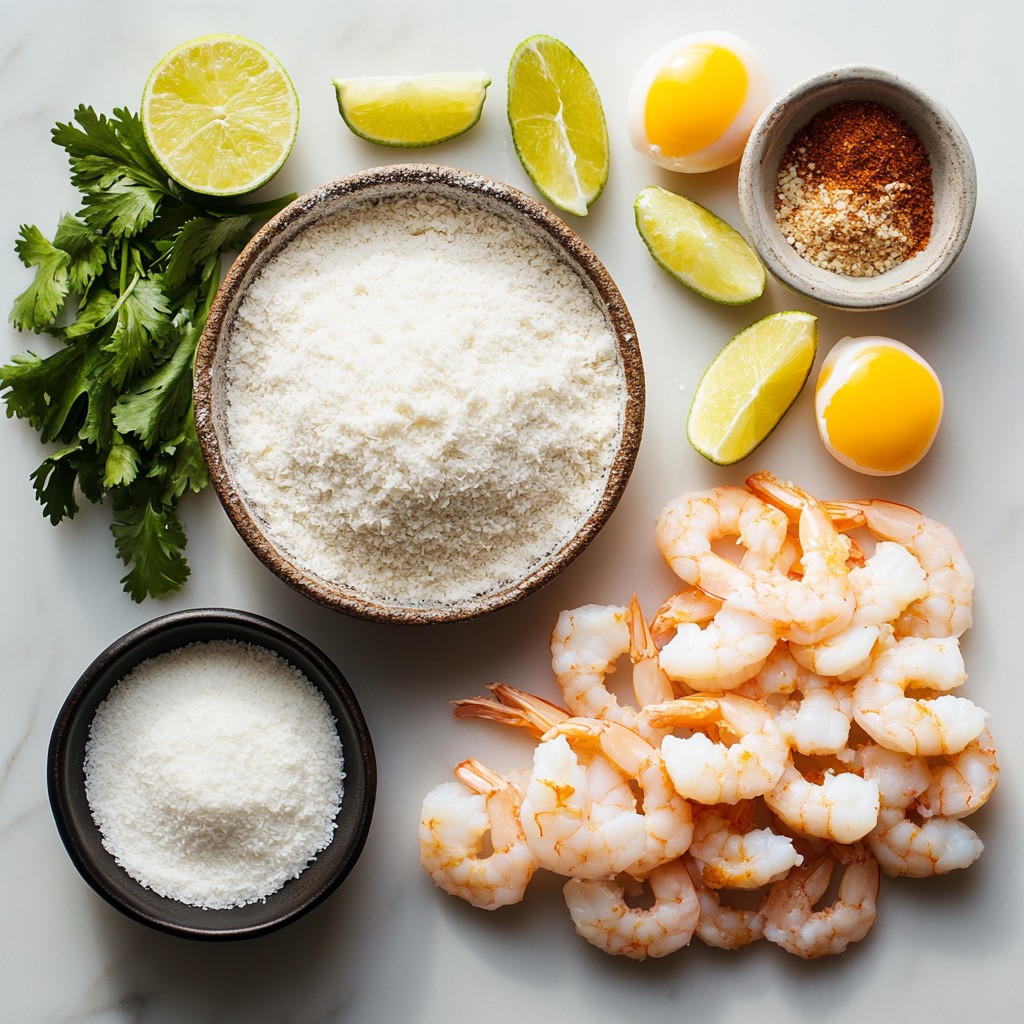
Complete List of Ingredients
- 1 lb large shrimp, peeled and deveined
- 1 cup all-purpose flour
- 2 large eggs, beaten
- 1 cup shredded coconut (sweetened or unsweetened)
- 1 tsp garlic powder
- 1 tsp paprika
- 1/2 tsp salt
- 1/2 tsp black pepper
- 1/2 cup panko breadcrumbs
- Oil for frying (coconut oil or vegetable oil)
- Lime wedges for serving
To make coconut crusted shrimp, you need fresh, large shrimp. The shrimp must be peeled and deveined. This ensures they are clean and ready for cooking. The flour helps the coating stick to the shrimp. Eggs add moisture and help bind the ingredients together. Shredded coconut gives the shrimp a sweet and crunchy crust.
Ingredient Substitutions
If you want a gluten-free option, use almond flour instead of all-purpose flour. You can also swap panko breadcrumbs with crushed gluten-free crackers. For a vegan version, replace eggs with a flaxseed meal mix.
If you like spicy food, try adding cayenne pepper to your coconut mix. You can also use unsweetened coconut for a less sweet flavor.
Nutritional Information
Each serving of coconut crusted shrimp contains about:
- Calories: 350
- Protein: 25g
- Fat: 20g
- Carbohydrates: 30g
- Fiber: 2g
- Sugar: 2g
This dish is rich in protein and brings you healthy fats from the oil and shrimp. Enjoy it with lime for a zesty kick. Pair it with a salad for a balanced meal.
Step-by-Step Instructions
Preparation of the Shrimp
Start by preparing your shrimp. Take 1 pound of large shrimp and peel them. Make sure to devein them too. If your shrimp are wet, use paper towels to pat them dry. This helps the coating stick better. Dry shrimp lead to a crispier bite.
Breading Station Setup
Now, set up your breading station. Take three shallow dishes. In the first dish, place 1 cup of all-purpose flour. In the second dish, beat 2 large eggs and pour them in. In the third dish, mix 1 cup of shredded coconut with 1/2 cup of panko breadcrumbs. Add 1 teaspoon of garlic powder, 1 teaspoon of paprika, 1/2 teaspoon of salt, and 1/2 teaspoon of black pepper. Stir this mixture well. You want a nice blend for great flavor.
Frying the Shrimp
Next, heat oil in a large skillet over medium-high heat. You'll need about 1/4 inch of oil. This helps the shrimp fry evenly. Dip each shrimp into the flour first. Make sure to coat it well and shake off any extra flour. Next, dip the floured shrimp into the beaten eggs. Let any extra egg drip off. Finally, coat each shrimp in the coconut mixture. Press gently to help it stick. Carefully place the shrimp in the hot oil. Fry them in batches so they don’t crowd each other. Cook for 2-3 minutes on each side. Look for a golden brown color. Use a slotted spoon to take out the shrimp when they are done. Place them on a paper towel-lined plate to absorb extra oil. Serve them hot with lime wedges for a zesty kick.
Tips & Tricks
Choosing the Right Oil
Use coconut oil for a tropical flavor. It enhances the dish's taste. If you don't have coconut oil, vegetable oil works too. Choose an oil with a high smoke point. This helps fry the shrimp without burning.
Ensuring the Perfect Crunch
To get a great crunch, make sure your shrimp are dry. Pat them with paper towels before breading. This helps the coating stick better. Use panko breadcrumbs for extra crispiness. They add a light, airy texture. Fry the shrimp in small batches. Avoid overcrowding the pan. This keeps the oil hot and helps achieve that golden brown color.
Serving Suggestions
Serve the shrimp hot with lime wedges. Squeeze the lime juice over the shrimp for a zesty kick. Pair it with a tasty dipping sauce. Sweet chili sauce or spicy mango salsa works great. Arrange the shrimp on a platter for a beautiful presentation. Enjoy this dish as an appetizer or a main course!
Pro Tips
- Pat the Shrimp Dry: Ensure your shrimp are patted dry before breading to help the coating adhere better.
- Use Fresh Ingredients: For the best flavor, use fresh, high-quality shrimp and coconut.
- Maintain Oil Temperature: Keep the oil at the right temperature; too hot can burn the coating, while too cool can make it greasy.
- Experiment with Dipping Sauces: Try different dipping sauces like sweet chili, spicy mayo, or mango salsa to elevate your dish.
Variations
Baked Coconut Crusted Shrimp
Baked coconut crusted shrimp is a tasty twist. You can make this dish without frying. To do this, preheat your oven to 400°F (200°C). Coat the shrimp as usual, then arrange them on a baking sheet. Use parchment paper for easy cleanup. Bake for 12-15 minutes until they turn golden brown. This method cuts down on oil but keeps the crispiness.
Flavorful Add-ins and Dipping Sauces
You can boost the flavor of your coconut crusted shrimp with a few add-ins. Try mixing in lime zest or fresh herbs like cilantro for a fresh touch. You can also use different spices like cayenne for heat or lemon pepper for zest.
For dipping sauces, sweet chili sauce works great. It adds a sweet and spicy kick. You can also serve it with a mango salsa. The fruitiness balances the shrimp's crunch.
Dietary Modifications (Gluten-Free, Vegan Options)
You can adapt this recipe for different diets. For gluten-free shrimp, use rice flour instead of all-purpose flour. Ensure your breadcrumbs are gluten-free as well.
If you want a vegan option, replace shrimp with tofu or cauliflower. Coat them in the same mixture and bake them for a crispy bite. Use plant-based milk instead of eggs for the breading process. This way, everyone can enjoy this delightful dish!
Storage Info
How to Store Leftovers
To store leftover coconut crusted shrimp, let them cool first. Place the shrimp in an airtight container. Use parchment paper between layers to keep them from sticking. Store in the fridge for up to 2 days. If you want to keep them longer, freezing is a better option.
Reheating Instructions
To reheat your shrimp, preheat your oven to 350°F (175°C). Place the shrimp on a baking sheet. Bake for about 10 minutes or until they are hot and crispy again. You can also use an air fryer for extra crispiness. Just set it to 350°F and cook for 5-7 minutes.
Freezing Coconut Crusted Shrimp
You can freeze coconut crusted shrimp for up to 3 months. Place the cooked shrimp on a baking sheet in a single layer. Freeze until solid, then transfer them to a freezer bag. Remove as much air as possible to avoid freezer burn. When ready to eat, you can bake them straight from the freezer. Adjust the cooking time accordingly.
FAQs
How do I know when the shrimp is done?
You can tell when shrimp is done by its color and texture. Cooked shrimp turns pink and opaque. It will also curl slightly. Fry it for 2 to 3 minutes on each side. If it looks golden brown, it's ready! Overcooking can make shrimp tough, so watch closely.
Can I use frozen shrimp for this recipe?
Yes, you can use frozen shrimp! Just make sure to thaw it first. Place the shrimp in the fridge overnight or run it under cold water for a quick thaw. Pat them dry before coating. This helps the breading stick better.
What dipping sauces pair well with coconut crusted shrimp?
A few tasty dipping sauces work well with coconut crusted shrimp. Sweet chili sauce adds a nice kick. Spicy mango salsa brings a fruity flavor. You can also try a tangy lime aioli for a creamy touch. These sauces enhance the shrimp's flavor and make it more fun to eat.
You now have a clear guide to making coconut crusted shrimp. We covered all ingredients, methods, and variations. You can even tweak this recipe to fit your dietary needs. Don’t forget about the tips for perfecting that crunch. Lastly, proper storage helps you enjoy leftovers later. Dive into this delicious dish and impress your friends and family. Enjoy making it your own!